What a Global Fuel Standard Does to Optimal Speed
A carbon price reaches the bridge as a surcharge on every tonne burned. That lowers the break-even speed, and the size of the drop is different for every hull.
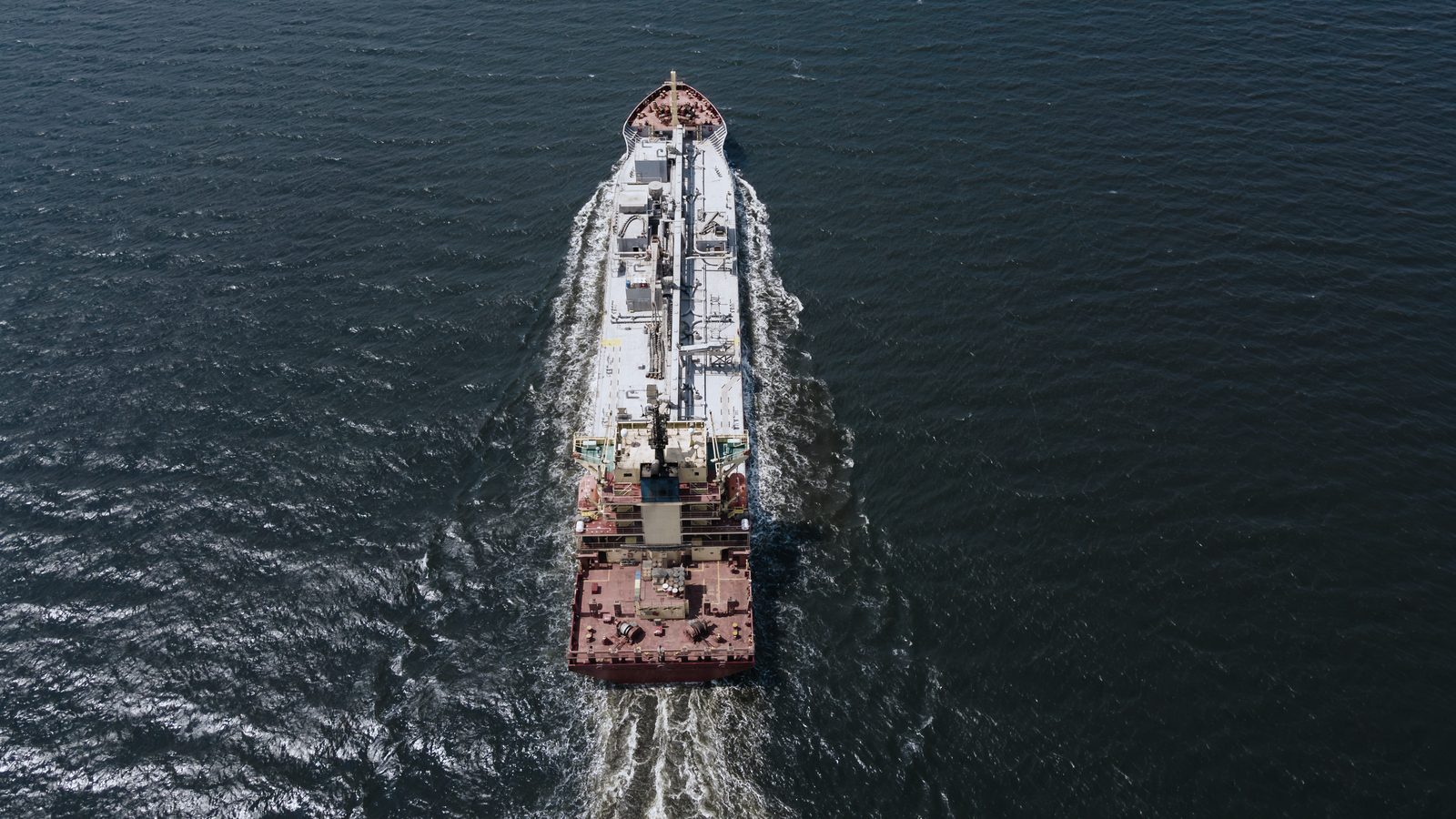
A global fuel standard doesn’t set a speed limit. It puts a price on how much greenhouse gas a ship emits for each unit of energy it consumes, and for a vessel burning conventional fuel oil that price arrives on the bunker invoice. Raising the effective cost of fuel without raising the value of a day at sea lowers the speed at which the fuel saved by slowing down equals the cost of the extra time at sea. In the first compliance years the surcharge adds roughly a tenth to what a tonne costs at today’s bunker prices, and the optimum moves a little. On the drafted trajectory to 2035 it moves a great deal.
What changes first is not the speed; it is whether you can show which speed was right for that hull on that passage, and who owes whom for the difference.
The numbers will change, but the mechanism will not
The obvious objection is that none of this is law yet, so preparing for it is working toward a maybe. That objection is fair on the details and wrong on the direction. The IMO Net-Zero Framework was approved at MEPC 83 in April 2025 and has not been adopted. An extraordinary session of the Marine Environment Protection Committee met in October 2025 to adopt it and voted 57 to 49 to adjourn for a year instead. The politics of that, and which states and owner groups are lined up where, are the subject of the companion piece What Global Carbon Pricing Does to Voyage Economics, linked at the foot of this page.
September did not settle it either. ISWG-GHG 22, the intersessional working group, met from 1 to 4 September 2026 with close to 1,200 registered participants. On the IMO's own summary the group held a preliminary exchange of views on the draft MARPOL Annex VI amendments and then deferred every document submitted under that item to ISWG-GHG 23 on 23 to 27 November. The life cycle assessment (LCA) item was not reached at all; no legal text was finalized. What the chair did record was "a genuine willingness within the Group to make concrete further progress" and to work toward putting text in front of MEPC 85, and that two thirds of the member states who took the floor supported a centralized system for collecting revenues through a GHG price.
MEPC 85 runs from 30 November to 3 December 2026. The IMO has announced that the resumed Second Extraordinary Session will sit on Friday 4 December, subject to confirmation by MEPC 85. Until MEPC 85 confirms it, it is a scheduled date rather than a fixed one.
Proposals now on the table already point to softer numbers. The Mærsk Mc-Kinney Møller Center for Zero Carbon Shipping assessed five of them in August. One, from Japan, keeps the framework’s two tiers but sets new, less stringent targets through 2035, drops the longer-term targets in favor of setting them later against the availability and affordability of new fuels, and proposes funding projects without a GHG price. Another, from Australia, Canada, South Africa and the UK, leaves the approved framework unchanged except for removing the 2028 target to allow for the year’s delay, so that it starts with the 6% reduction set for 2029.
So, treat the figures as provisional and the mechanism as durable. The figures that follow come from the text approved in April 2025, which starts in 2028. Every version on the table prices the greenhouse gas a ship emits per unit of energy it consumes, measured well-to-wake, against a target that declines each year. That is the part that reaches the speed decision, and it is the part nobody is arguing about.
The price reaches you as a fuel surcharge
The draft sets two targets against a reference value of 93.3 grams of CO2 equivalent per megajoule, the well-to-wake average of the fleet in 2008. For 2028 the base target is a 4% reduction on that, which is 89.568 gCO2eq/MJ, and the direct compliance target is a 17% reduction, which is 77.439. Emissions between those two lines are charged at US$100 per tonne of CO2 equivalent as a Tier 1 remedial unit. Emissions above the base target are charged at US$380 as a Tier 2 unit. The reference value and the targets are set in Regulation 35 of the draft revised MARPOL Annex VI, circulated as IMO Circular Letter No.5005. The two prices are in Regulation 36, paragraphs 8 and 9, and both are initial prices tied to the reporting periods 2028 to 2030. The targets tighten every year, reaching a 30% base and 43% direct compliance reduction by 2035.
The framework is technology-neutral; it mandates no specific fuel and it caps no speed. It measures how far the greenhouse gas intensity of a ship’s energy sits above the target, multiplies that gap by the total energy the ship consumed in the year and by a price, and sends a bill. Which means the charge scales with the tonnes you burn, and the tonnes you burn scale with how fast you run.
How much, in 2028 and in 2035
The clearest public arithmetic on this was published by Ship & Bunker in April 2025, and it is worth using because it shows its workings. On assumptions of VLSFO at roughly 91 gCO2/MJ well-to-wake and an energy density of about 42.7 MJ/kg, it put the added compliance cost at about US$75 for every tonne of VLSFO consumed in 2028, rising to about US$469 per tonne by 2035 if the two price levels are held static, which they may not be.
Two caveats travel with that. The first is that the IMO has not yet set the default carbon intensity values for each fuel type, so the intensity assumption is the author's rather than the regulator's, and a different default moves the whole answer. The second is that US$75 only means something as a percentage, and the percentage depends entirely on the bunker price you set it against. Set against the US$604.50 per tonne that the G20-VLSFO index averaged over the year to April 2025, US$75 was about 12.4% on top of the fuel. Against Ship & Bunker's Global 20 Ports Average of US$874.00, read on 14 September 2026, the same US$75 is nearer 9%.
For comparison, the same analysis put EU ETS compliance on a voyage between an EEA port and a non-EEA port, where half the emissions are in scope, at about US$116 per tonne of VLSFO in 2028, on the allowance prices of the time. On the voyages it applies to, the European cost is the larger of the two at the start, and unlike the global one it’s already being paid.
What that does to the speed decision
The direction is not in dispute, and the IMO states the rule of thumb plainly. On the assumption that engine power follows the cube of speed, it estimates that a displacement ship slowing down by 10% cuts its power demand, and the propulsion fuel it burns each hour, by about 27%. The same page then supplies the correction that most people writing about slow steaming drop: on a voyage basis, once you count the extra time it takes to cover the distance, the propulsion fuel saving is approximately 19%. Both figures cover propulsion only. Auxiliary engines and boilers keep burning through every extra hour at sea, so the saving on the whole fuel bill is smaller.
So, the trade is roughly this: give up 10% of speed, spend about 11% more time on passage, and save up to about a fifth of the propulsion fuel for the voyage. Whether that is worth doing depends on the value of a day compared with the cost of a tonne of fuel. A carbon price raises what a tonne costs; it does not raise what a day earns, at least not inside a fixture already agreed. So the speed at which the two balance falls.
The size of that fall is where the piece has to be honest. A US$75 surcharge on a tonne of fuel priced in the mid-800s is about 9% on the fuel side of a trade that also has time, hire, port slots and cargo readiness on the other side. It moves the break-even speed; it does not transform it. The 2035 figure, at roughly US$469 per tonne on the same static-price basis, is a different order entirely, and it lands inside the working life of most of the tonnage trading today.
The direction also reverses for one class of ship. A ship that beats the direct compliance target earns surplus units equal to its positive compliance balance, which is its margin under the target multiplied by the total energy it consumed (Regulation 36, paragraph 11). Each unit can be used once: transferred to another ship to balance that ship’s Tier 2 deficit, banked for a later reporting period, or cancelled. It expires two calendar years after the year it was issued (paragraphs 12 to 15). Surplus units cannot be used against a Tier 1 deficit, which is paid into the IMO Net-Zero Fund. A vessel running well under the target therefore earns more surplus units the more energy it consumes, which is an incentive pointing the opposite way to the fuel cost. What a unit will be worth is not knowable yet. The text sets out how units are earned and used, not what another ship will pay for one, and the guidelines it refers to have not been written. For the large majority of the fleet burning fuel oil, the direction is down.
Which is why the answer is per hull, not per fleet
A fleet-wide instruction to drop half a knot is a blunt answer to a question that has a specific one for each ship. The cube is a rule of thumb, as the IMO itself acknowledges. The curve that decides where your optimum sits is the measured relationship between speed and consumption for that hull, at that draft and trim, in its current condition rather than the condition the yard delivered it in. Hull and propeller fouling moves that curve, and it moves it continuously.
This matters more under a price than it does under a rating. A CII rating lands in a band, so a stretch spent off the optimum can be pulled back later in the year and the ship still finishes on the same letter. A charge on the energy consumed has no bands; it accrues with every tonne, so there is nothing to recover into. A speed and consumption curve that is out by a few percent is out in the same direction on every voyage of the year. That is the practical answer to “should we slow down”: not until you know where your own curve crosses the break-even speed. The fleet average and the vessel-specific figure are rarely the same, and on a fouled hull they can differ considerably.
The European price is already running
There is a tendency to treat the IMO framework as the moment carbon starts costing money. For anyone trading in and out of Europe it started in January 2024. EU ETS applies to ships of 5,000 gross tonnage and above, covering all emissions on voyages between two EEA ports and in port, and half of emissions on voyages that start or end outside the EEA. FuelEU Maritime separately caps the greenhouse gas intensity of the energy consumed on board, with its own reporting and penalty cycle.
The phase-in is often reported wrongly, and the timing matters. The surrender that fell due on 30 September 2026 covered 70% of emissions reported for 2025, and those were carbon dioxide only. The surrender due in September 2027 covers 100% of 2026 emissions and, for the first time, methane and nitrous oxide as well. Budget each surrender on its own year’s rules. Carry the 2026 surrender’s 70%, carbon-dioxide-only basis forward into the 2027 bill and you leave the larger one unplanned.
On the overlap between the European and global mechanisms, Lloyd's Register is direct: any ship of 5,000 gross tonnes or more calling at EU ports, with certain exceptions, will be regulated twice. On payment it is more careful, suggesting there may be a way to report to both and pay once. So double regulation is expected and double payment is not settled.
For the speed decision, that distinction changes the size of the answer more than its shape. The three mechanisms, EU ETS, FuelEU Maritime and the IMO framework, do not each need their own answer. They cover different voyages and are calculated differently, but where they apply they all land on the fuel side of the same trade, and the operator’s problem is not three regimes but one number: what the next tonne costs, all in, on this voyage.
The global price is drafted and not in force; the European one is running and its deadline is dated. Put your own fuel mix in and see the FuelEU balance and EU ETS cost for a voyage or a year, on your figures rather than a fleet average.
Estimate your FuelEU and EU ETS cost→You are probably not the one who sets the speed
Every recommendation to slow down has a second party who has to agree to it. Under a time charter the charterer orders the speed within the limits the charter party allows, and the IMO's own speed management guidance says as much: optimum speeds for fuel efficiency "can however often be challenging due to scheduling requirements from Charterer and other influences". An owner who has worked out the fuel-optimal speed and cannot instruct it has produced an argument, not a saving.
The allocation question is further along than most operators assume. BIMCO's published position is that the commercial party responsible for setting the speed and route of a ship should bear the greenhouse gas cost as an economic element, which is the charterer under a time charter party and the party committing the ship to the voyage under a voyage charter party. The draft regulation points the same way. Regulation 36, paragraph 7 preserves the ship's ability to recover costs relating to what it calls the operational responsibility of the ship, and defines that as determining the fuel used, the cargo carried, the route or the speed.
So the useful move is not to issue a speed instruction. It is to put a number in front of the party who sets the speed. And the date that matters is when the fixture was agreed, not when the voyage sails. A time charter agreed this quarter may still be running when a price applies, and the clause that decides who pays for the extra tonne is being drafted now, by somebody who may not have priced it.
Three things commonly got wrong
Three claims in circulation that deserve correcting.
- “A carbon price will change which route the system picks.” On a single-fuel voyage it will not. Carbon dioxide is a direct consequence of the fuel burned, so the route that burns least is already the route that emits least, and the carbon cost is added on top of the fuel calculation rather than competing with it. What a price does change is which fuel you want to be burning and the break-even speed. The four ledgers a single route now answers to are the subject of a separate piece, linked at the foot of this page.
- “The vote is on 4 December.” The IMO has scheduled the resumed Second Extraordinary Session for Friday 4 December 2026, subject to confirmation by MEPC 85, which runs 30 November to 3 December. The date is announced, not confirmed.
- "The September surrender covers this year's emissions." It covers last year's. The surrender that fell due on 30 September 2026 was for 70% of emissions reported for 2025, carbon dioxide only. Methane and nitrous oxide enter scope from the 2026 emission year and land on the September 2027 surrender, together with the step to 100% coverage, which makes the September 2027 increase larger than either change alone.
What is worth doing before the vote
The test for any preparation recommended this autumn is whether it still makes sense if the vote goes the other way. These do.
- Establish the real speed and consumption curve for each hull in its current condition, not the design curve. Every version of this regulation prices energy consumed, and so does FuelEU, and so does EU ETS. The curve is the input all three share.
- Work out what a day is worth on your trades, explicitly, rather than settling it on a phone call. The carbon price only changes an answer you already have. If the speed decision is currently made by habit, a surcharge will not improve it, it will just make the habit more expensive.
- Size the European exposure first, because it is dated and the global one is not. The annual 30 September surrender and the FuelEU cycle are real bills on a known calendar.
- Put emissions cost allocation into fixtures being negotiated now, against BIMCO's speed and route principle. A fixture agreed this quarter can outlive the vote.
- Watch ISWG-GHG 23 on 23 to 27 November rather than waiting for December. September’s meeting deferred every document on the draft amendments to it, so that is where the text MEPC 85 will consider gets worked out.
What a vessel model can and cannot tell you
A speed and consumption model built from a ship's own validated data, rather than from a sister-class average or a design curve, is the part of this problem that can be solved now. It does not depend on the vote, and it’s the input that CII, FuelEU, EU ETS and any global price all end up reading.
What no tool can give an operator yet is a credible IMO exposure per vessel. The default carbon intensity values the framework will apply to each fuel type have not been set, and until they are, every per-tonne figure in circulation rests on somebody's assumption about what they will be. Coach Solutions' own calculator covers the two European mechanisms and deliberately stops there for that reason. At this stage, any IMO figure quoted per ship remains an estimate based on assumptions, regardless of the number of decimal places reported.
The honest summary is that the regulation has not decided anything yet and the arithmetic underneath it is not waiting for the regulation. The speed a ship should sail at has always been a trade between fuel and time. A carbon price moves one side of it. What decides whether you can act on that is whether you know your own curve, and whether the person who orders the speed is looking at the same number you are.
Sources
- IMO, ISWG-GHG 22 meeting summary, 1 to 4 September 2026
- IMO, The IMO Net-Zero Framework FAQs
- IMO, IMO progresses work on ship emissions, pollution and ocean protection (press briefing, 1 May 2026)
- Mærsk Mc-Kinney Møller Center for Zero Carbon Shipping, Countdown: Assessing proposals to meet the 2023 IMO GHG Strategy, 26 August 2026
- IMO, Circular Letter No.5005, Draft revised MARPOL Annex VI (Regulation 35; Regulation 36, paragraphs 7 to 15)
- IMO GreenVoyage2050, Speed Management
- DNV, IMO Net-Zero GHG Framework: GHG Fuel Intensity
- DNV, IMO Net-Zero GHG Framework
- Lloyd's Register, Double compliance, double cost: FuelEU vs IMO's Net-Zero Framework
- BIMCO, Greenhouse Gas (GHG) Emissions policy position
- European Commission, Reducing emissions from the shipping sector
- Ship & Bunker, IMO 2028: How Much Is it Going to Cost?, 15 April 2025
Continue reading
Common questions
Does a carbon price make ships sail slower?
It lowers the break-even speed, because it raises the effective cost of a tonne of fuel without raising the value of a day at sea. How far it lowers it depends on the surcharge against the bunker price and on what a day is worth on that trade. Ship & Bunker’s published estimate of April 2025 puts the IMO framework at about US$75 per tonne of VLSFO in 2028, which is a single-digit percentage on a bunker price in the mid-800s, and about US$469 per tonne by 2035 on a static-price basis. The first moves the optimum; the second moves it a long way.
Does the IMO Net-Zero Framework set a speed limit?
No, it is technology-neutral. It sets a target for the greenhouse gas a ship emits per unit of energy it consumes, measured well-to-wake, against a 2008 reference value of 93.3 gCO2eq/MJ, and prices the gap. It mandates no specific fuel and caps no speed. Speed is how the price reaches the operator, not what the regulation targets.
How much fuel does a 10% speed reduction actually save?
The IMO’s GreenVoyage2050 speed management guidance estimates that slowing down by 10% reduces hourly propulsion fuel consumption by about 27%, on the rule of thumb that power follows the cube of speed. On a voyage basis, once the added time to cover the distance is counted, the propulsion fuel saving is approximately 19%. The 19% figure is the right starting point for a commercial calculation, although other consumption, such as auxiliary engines running through the extra time at sea, and the vessel’s actual condition will reduce it.
Why is the optimal speed different for each vessel?
Because the speed and consumption relationship is specific to the hull, its draft and trim, and its current condition rather than its design condition. Fouling moves the curve continuously. Under an annual rating an approximate curve averages out. Under a charge levied on the energy consumed it does not, because the error repeats in the same direction on every voyage of the year.
Who pays the carbon cost when the charterer orders the speed?
BIMCO's position is that the commercial party responsible for setting the ship's speed and route should bear the cost as an economic element, which means the charterer under a time charter party and the party committing the ship to the voyage under a voyage charter party. The draft regulation points the same way: Regulation 36, paragraph 7 preserves cost recovery for what it calls the operational responsibility of the ship, defined as determining the fuel used, the cargo carried, the route or the speed. In practice it depends on what the fixture says, and fixtures agreed now may still be running when a price applies.
Will a carbon price change which route the routing system chooses?
On a single-fuel voyage, no. Carbon dioxide is a direct consequence of fuel burned, so the least-fuel route is already the least-carbon route and the carbon cost stacks on top of the fuel calculation rather than competing with it. Where a price does change the answer is the choice of fuel, the consumption rate, and the speed at which the fuel saved by slowing down equals the cost of the extra time at sea.
When will the IMO decide, and is 4 December fixed?
It is not fixed. MEPC 85 runs 30 November to 3 December 2026 and the resumed Second Extraordinary Session is scheduled for 4 December subject to confirmation by MEPC 85. ISWG-GHG 22 met from 1 to 4 September 2026, deferred every document under the Annex VI agenda item to ISWG-GHG 23 on 23 to 27 November, and finalized no legal text.
Try it on your own numbers
Want to learn more?
Talk to our team about voyage optimization for your fleet.