The Routing Decision Hasn't Changed. What It Costs Has.
One weather-routing call now answers to CII, FuelEU and ETS, not just the bunker bill.
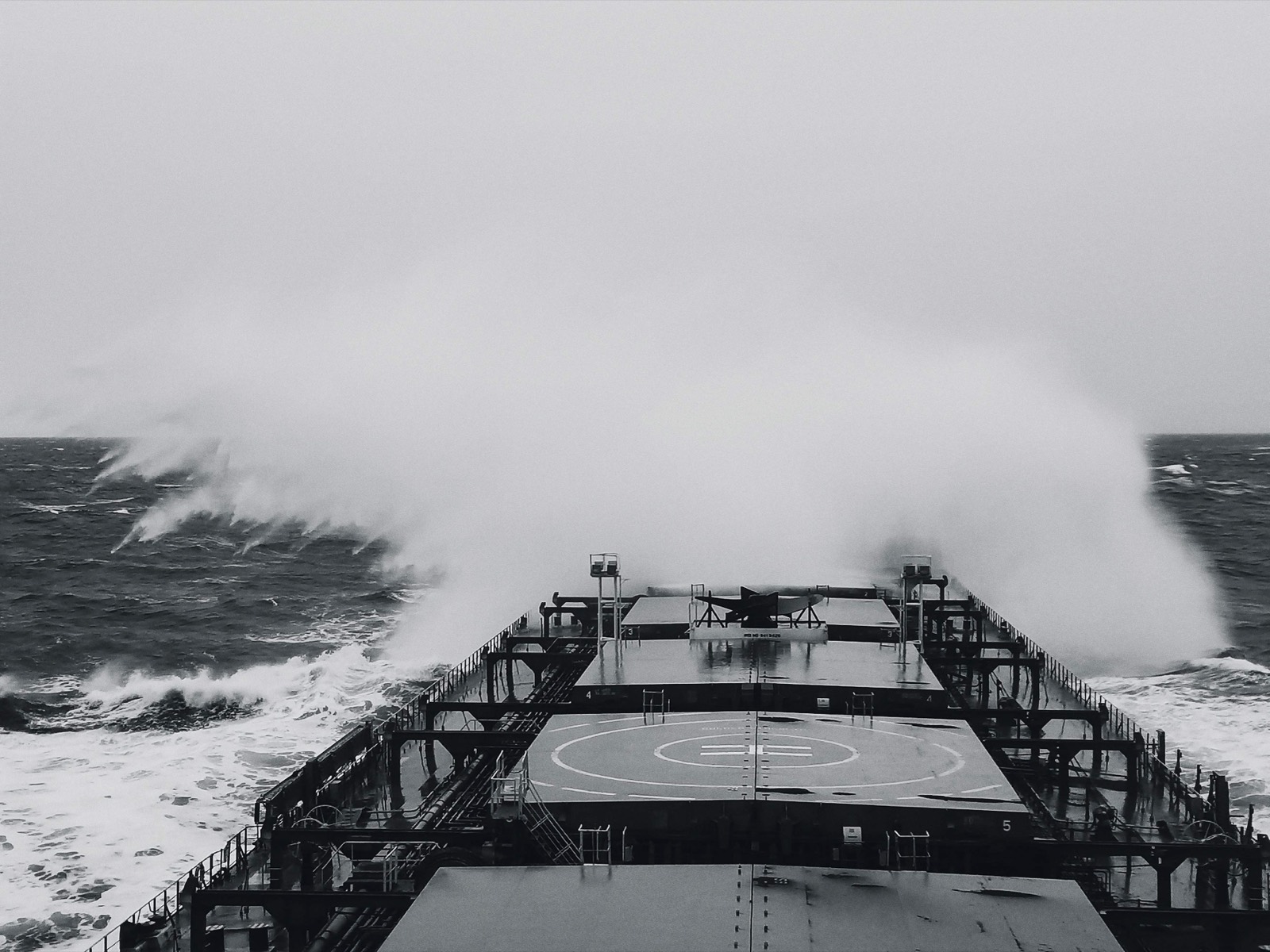
Weather routing as a discipline has not changed much. The aim is still to get the cargo to the discharge port without taking damage, losing time or overconsuming, and on most voyages fuel matters more than time. What has changed is what a single routing decision is now accountable for.
The same decision now carries three more costs that do not show up on the bunker invoice. That is the shift, and it is why a route chosen on fuel alone is sometimes the wrong one.
What the same decision is accountable for now
- Fuel cost: still the biggest absolute number, still the most operationally visible.
- CII rating contribution: every voyage adds to the annual AER calculation, and the contribution varies by routing choice more than most operators think.
- FuelEU intensity: for EU voyages, the routing decision interacts with fuel type and pooling economics.
- ETS allowance cost: for EU voyages, every additional tonne of HFO burned is a priced carbon liability.
Stack those four and the picture is less simple than it looks. Carbon dioxide is a direct consequence of fuel burned, so on a single-fuel voyage the route that burns least is also the best route for CII, FuelEU and ETS. Those costs are added on top of the fuel calculation rather than traded against it. Where the two come apart is fuel type and consumption rate. A system that treats every tonne as equivalent will price a voyage wrongly the moment a vessel switches grade, runs dual-fuel, or burns at a rate its model was never calibrated to.
The mechanics are the same. The inputs decide whether it works.
- Weather data at a resolution matched to the decision. Higher resolution is not automatically better. A commercial passage is not improved by constant small course adjustments chasing marginally better conditions, and the maneuvering usually costs more than the gain. What matters is that the forecast resolves the systems that will affect the passage, and that it is refreshed often enough to catch them moving.
- A fuel-consumption model calibrated to the specific vessel, not a sister-class average. A 5% error in the fuel curve means every routing recommendation is built on fiction. This is where most off-the-shelf routing tools quietly fail.
- Real-time decision updates during the voyage. A plan set at departure is worth less on day four than it was on day one. If the routing system cannot recalculate as conditions change, the voyage is committed to a worse outcome before the weather even arrives.
The part the operators getting this right have worked out
None of this removes the master from the decision. The better operators build a feedback loop around it. They track the gap between the routed voyage and the sailed one, and when a vessel deviates they follow up to find out why. Sometimes the answer is a navigational constraint the model did not hold, and that can be built in so the gap closes next time. Often it is that the route on the chart is the one the vessel has always run, which is not the same as the one that costs least.
- Tracking the gap between the routed voyage and the sailed voyage, and treating a persistent gap as something to resolve rather than tolerate. Where a deviation reflects a real navigational constraint, that constraint can be built into the model. Where it does not, closing the gap is a matter of trust between the bridge and the desk, earned by the routing being right often enough to be worth following.
- Running routing as a forecast exercise, not just an execution exercise. Before the charter is signed, the voyage economics are modeled, including CII contribution and ETS exposure, and the fixture is priced accordingly.
- Making routing decisions commercially visible. The chartering team sees the intensity and allowance implications of a routing choice, not just the fuel number.
Weather is as important as it has always been. What has changed is the financial consequence of each weather decision, which now sits across four ledgers instead of one. Until a fleet can put all four in front of the person making the call, in time to change it, weather routing is solving an old problem while paying a 2026 bill.
Sources
Common questions
Does weather routing still only optimise for fuel and safety?
Not since 2024. The same route now carries three priced or rated consequences besides fuel: EU ETS allowances on emissions in scope, a FuelEU Maritime greenhouse-gas intensity position, and a contribution to the ship's annual CII rating. A route chosen purely on lowest fuel burn can therefore be the more expensive route once allowances and compliance position are counted, which is a genuinely new arithmetic rather than a reframing of the old one.
Is the fastest route or the shortest route usually the cheapest?
Neither reliably. The cheapest route is the one that meets the charter party's arrival obligation at the lowest total of fuel, emissions cost and compliance impact, and that is rarely the shortest line on the chart or the fastest passage. A shorter route held into a head current can burn more than a longer one routed around it, and speed raises fuel consumption steeply enough that the last knot is usually the most expensive one bought.
Want to learn more?
Talk to our team about voyage optimization for your fleet.