The Reroute-or-Hold Call: Timing the Deviation So It Pays
Deviate too early and the forecast moves under you. Too late and it cannot pay for itself. The window in between is where routing earns its money.
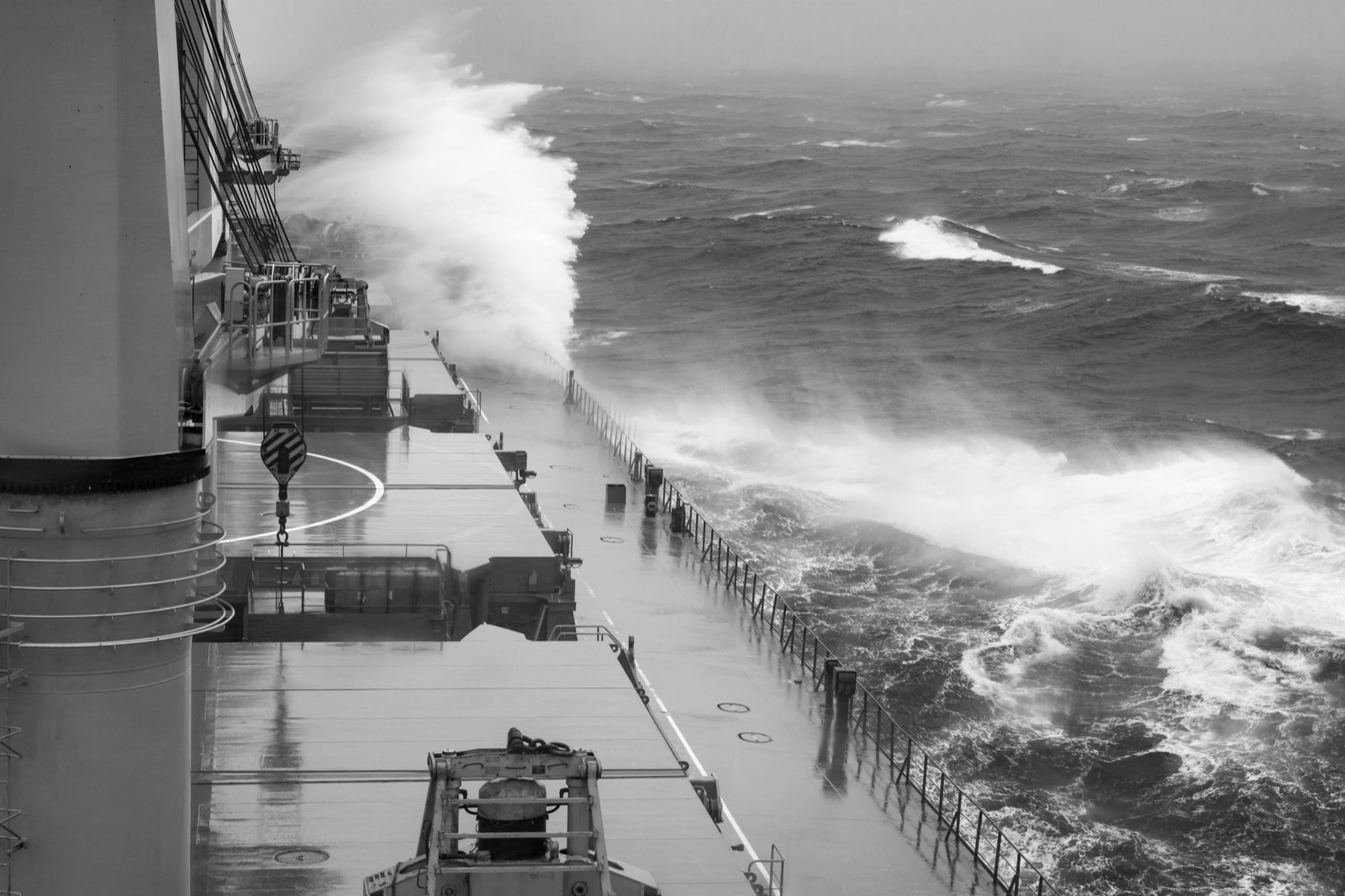
Every chief officer knows the conversation. The forecast has moved overnight, the routing system is proposing a deviation, and the watch wants to know whether to come round or hold course. The decision sits with the master, and it has to be made on the information in front of them, not the information that arrives two days later when the weather has settled the argument.
The cost of getting it wrong runs both ways. A reroute that was never needed burns time and fuel. A hold that should have been a reroute burns more of both. What usually decides it is not the quality of the recommendation but its timing. A sound deviation proposed too far ahead of the weather is a poor deviation, because the vessel pays the distance now against a forecast that still has days left to move.
That is what separates the fleets running voyage optimization as an operational discipline from those running it as a reporting tool. It takes a system that re-evaluates continuously, a desk that knows when to look harder, and four questions answered before the helm moves.
Ask how the forecast is being re-evaluated
A deterministic forecast gives one answer rather than a spread of probabilities, so confidence in it has to come from somewhere else: how often it is refreshed, whether the route is re-run against each update rather than against the picture at departure, and whether anyone is watching the shifts a threshold will not catch. A forecast that has moved materially is not automatically wrong, and large shifts are sometimes exactly right. It is a reason to look again with the routing desk involved, not to act or dismiss on the number alone.
Time the call to the forecast window, not the voyage clock
The instinct is that earlier is safer. It is not. A deviation belongs inside the three to five day forecast window, where the weather it avoids is resolved well enough to be real. A vessel that comes round on day two for a system forecast on day ten has bought distance against a picture that will very likely change, and the added time is spent whether the weather arrives or not. There is also a point late in the passage where a deviation can no longer earn back what it costs, and the answer becomes hold. Both edges matter, and the early one catches more operators than the late one.
Price the alternative in full, not in fuel alone
"This reroute saves 2% fuel" is the figure everyone reads first. Whether it is the right figure depends on what the system was asked to optimize for. Where the target is fuel, it is the answer. Where the voyage also carries an ETS liability, a FuelEU intensity position and a charter-party speed and consumption obligation, the fuel line alone is not the comparison. The system has to put the whole bill in one place:
- The time penalty against the original ETA
- The ETS and FuelEU consequence of the changed consumption profile
- The charter-party speed and consumption obligations the deviation may breach
- Port congestion at the shifted arrival
Assembled by hand across three dashboards, that comparison does not get made under time pressure. Presented in one view, against a target the operator has set deliberately, the headline number becomes one to act on rather than one to second-guess.
Treat the bridge as an input, not an override
A master who has run the route thirty times holds information the model does not: how the sea behaves in that corner in that season, where the forecast tends to overstate, what the swell does that the grid misses. That belongs in the decision. It is also true that a route run thirty times can be run out of habit, holding into a head current because it is the shortest line on the chart and the one the vessel has always taken. Neither the model nor the bridge should win by default. The deviation that gets discussed, with the reasoning visible on both sides, is the one that improves the next call.
What to automate, and what to leave alone
None of this argues against automation. It argues for being deliberate about which parts of the call it owns outright and which it escalates.
- Automate what the thresholds can carry, and escalate what they cannot. Consumption and route-deviation thresholds, and routine route updates against a refreshed forecast, can and should run automatically. A materially shifted picture, a constraint the model does not hold, or a conflict with a charter obligation is where the routing desk looks directly. The value is in the system knowing which is which.
- Automate the comparison. When a reroute is proposed, the full-cost view (fuel, time, intensity, allowance) should appear in one place, not be assembled by hand across three dashboards.
- Keep the final call with the vessel, and keep it visible ashore. A decision shore-side cannot see, or cannot follow the reasoning behind, breaks the feedback loop that makes the next one better.
Good mid-voyage routing is not the practice of reacting to every forecast update, nor of ignoring them. It is the practice of knowing which window a decision belongs in, and when a shift is worth a second look from a person rather than a threshold. A system that alerts on every model wobble teaches the bridge to stop listening. One that holds its recommendations to the window where they can pay, and says clearly when a human should weigh in, is one the bridge comes to follow, because following it works.
Sources
Common questions
When in a voyage should a weather reroute be decided?
Inside the reliable forecast window, which in practice means roughly three to five days ahead of the weather being avoided. Deciding earlier is the more common and more expensive error: a deviation committed on day two commits fuel and distance against a forecast that has not yet firmed up, and the system that produced it will revise. Deciding later removes the option entirely, because by then the ship is already in the weather.
Is every forecast change worth a mid-voyage deviation?
No. A deviation costs distance, fuel and time immediately, while the benefit is a probability rather than a certainty, so a small forecast shift routinely fails to justify one. The test that holds is whether the expected saving still exceeds the committed cost of the deviation at the low end of the forecast's confidence, not at its central estimate.
Want to learn more?
Talk to our team about voyage optimization for your fleet.